Resalat Al-Salam Global Foundation Presents an English-Language Report on Its Achievements Since the Beginning of 2026 to the Director of the Istanbul Metropolitan Municipality Police Department

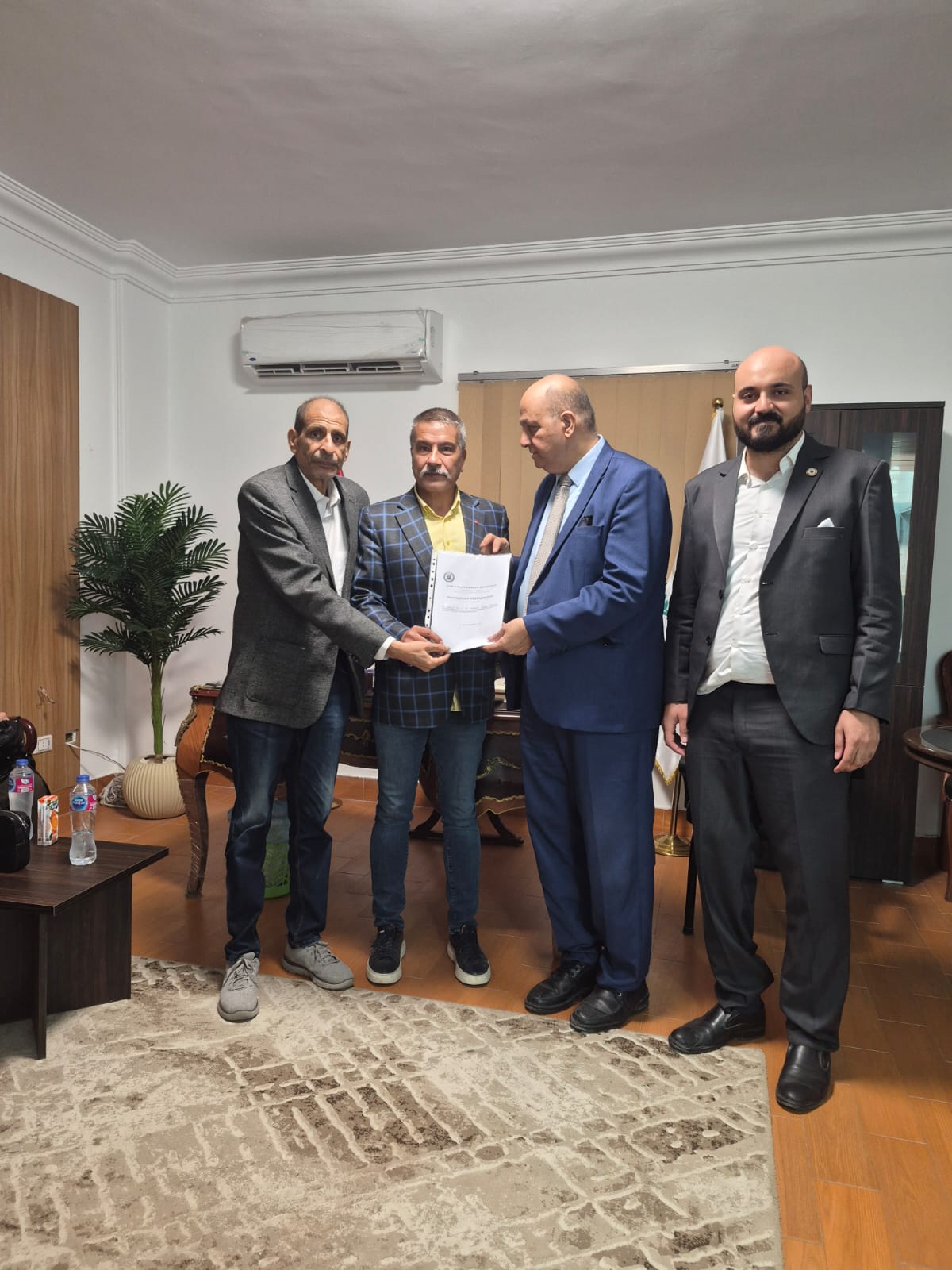
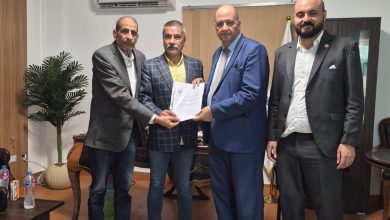
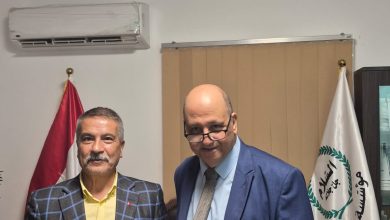
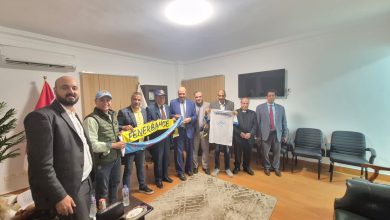
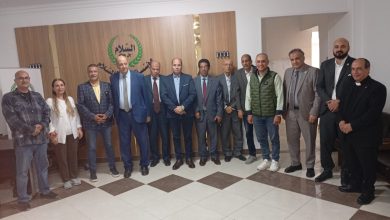
In implementation of the directives of distinguished Arab thinker Professor Ali Mohamed Al-Sharafa Al-Hammadi, founder and Supreme President of Resalat Al-Salam Global Foundation, a delegation from the Foundation’s Cairo office today delivered an English-language copy of a comprehensive report documenting the Foundation’s achievements from January 2026 to date to Major General Metin Alper, Director of the Istanbul Metropolitan Municipality Police Department, during his visit to the Foundation’s headquarters in Cairo.
The report was presented by Dr. Moataz Salah El-Din, Chairman of the Foundation’s Board of Trustees; Mr. Atef Zayed, Chairman of the Advisory Board; and Mr. Mohamed Moataz, the Foundation’s Foreign Relations Coordinator, who prepared the English-language report.
The meeting was attended by Mr. Mohamed Anas, Deputy Director-General for Financial Affairs; Dr. Gerges Awad, Secretary-General of the Foundation in Cairo; Mr. Mohamed Fathy El-Sherif, Deputy Chairman of the Foundation’s Board of Trustees in Cairo; Dr. Mohamed Ghaida, Assistant to the Chairman of the Advisory Board; Dr. Abou El-Fadl El-Asnawi, member of the Board of Trustees; Mr. Hisham El-Naggar, member of the Board of Trustees; Mr. Ismail Eid, member of the Board of Trustees; and Mr. Khaled Abdel Aziz from the Foundation’s Public Relations Department.
This initiative comes as part of the Foundation’s efforts to introduce its activities and international achievements throughout 2026, highlighting its international engagements, partnerships, and initiatives in cultural, intellectual, and academic fields around the world, as well as its regional and international efforts to promote the values of peace, coexistence, and dialogue among peoples.
The report provides a comprehensive overview of Resalat Al-Salam Global Foundation’s activities and international achievements since the beginning of 2026. Prepared by Mr. Mohamed Moataz, the Foundation’s Foreign Relations Coordinator in Cairo, it documents the Foundation’s activities from January through November 19, 2026. These include international engagements, cooperation agreements, academic and cultural partnerships, diplomatic meetings, and institutional expansion in several countries around the world.
The report explains that the Foundation, established in 2019, obtained official recognition in May 2026 as a non-governmental organization partnered with UNESCO. It also participated in UNESCO’s Africa Week in Paris, which brought together representatives from 66 countries. The report described this participation as an important milestone in the development of the Foundation’s international presence.
Indonesia featured prominently in the Foundation’s achievements during the year, with cooperation expanding to include government institutions, universities, religious bodies, and civil society organizations.
These activities included allocating a permanent space for the Foundation inside the Grand Istiqlal Mosque in Jakarta. The Governor of Lampung also directed that the publications of Arab thinker Ali Mohamed Al-Sharafa Al-Hammadi be distributed among institutions affiliated with the governorate. In addition, the Director of Lampung Police expressed his appreciation for the Foundation’s activities and offered to provide it with an additional office.
At the academic level, cooperation extended to three Indonesian universities and educational institutions: Maulana Malik Ibrahim State Islamic University in Malang, Jakarta State University, and Dar Al-Fatah Islamic University in Lampung.
The report noted that several of Al-Sharafa Al-Hammadi’s publications had been incorporated into academic curricula and educational programs. These include his book The Philosophy of Civilizational Reform in the Quran, which became a compulsory reference for postgraduate students at Dar Al-Fatah University. A permanent section has also been allocated to his publications at the library of Maulana Malik Ibrahim University, which covers an area of 5,000 square meters across three floors.
Gadjah Mada University also hosted three lectures delivered by Dr. Tamer El-Ghazawy, Director of the Foundation’s Office in Indonesia. The lectures addressed Al-Sharafa Al-Hammadi’s publications, reflection on the Holy Quran, and the philosophy of civilizational reform.
The activities also included organizing the “Al-Sharafa Al-Hammadi Quran Memorization and Reflection Competition,” which attracted the participation of more than 70 religious institutions and universities. The awards ceremony took place on October 28, coinciding with the 65th anniversary of the founding of Maulana Malik Ibrahim University.
As part of its institutional expansion, the Foundation signed a memorandum of understanding with Raden Mas Said State Islamic University in Surakarta, as well as another cooperation memorandum with Salatiga State Islamic University. This brought the number of the Foundation’s offices in Indonesia to three, with an additional office at Jakarta State University becoming operational in November.
The Indonesian portfolio also included a $10,000 scholarship awarded to Al-Kawkab Religious Institute in Jakarta. In addition, the Foundation received an official invitation to open a branch in Singapore and to participate in a conference on Islamic Studies and the Arabic Language scheduled for November 28, 2026.
In Brunei Darussalam, the report documented a meeting between Prince Abdul Malik, son of Sultan Hassanal Bolkiah and Assistant Minister of Foreign Affairs, and Dr. Tamer El-Ghazawy during a conference at Sultan Sharif Ali Islamic University. The meeting was also accompanied by directives to distribute Al-Sharafa Al-Hammadi’s publications electronically to the university’s faculties of Sharia.
The Embassy of Brunei Darussalam in Cairo also provided official guidance on four areas of potential cooperation: organizing joint events, cooperating with the university, exchanging publications, and holding a joint seminar. The Foundation subsequently submitted an official cooperation request to one of the country’s major universities through the embassy.
In Tajikistan, the Foundation held a meeting in July with Ambassador Parviz Mezdolzoda, his deputy, and an embassy counselor. Both sides agreed to pursue intellectual, cultural, and media cooperation. Subsequently, the embassy participated in two conferences organized by the Foundation in Cairo.
Developments in this area also included preparations for an international conference in Cairo in early December 2026, as part of the International Decade for Strengthening Peace for Future Generations 2027–2036. This initiative was proposed by the President of Tajikistan and adopted by the United Nations General Assembly. The Foundation’s delegation was invited to participate.
The Foundation prepared a proposal paper entitled “Cairo and International Dialogue for the Peace of Future Generations,” outlining four key themes for its participation in the conference. The event is intended to serve as an Arab preparatory platform ahead of the international launch of the initiative from Tajikistan’s capital, Dushanbe, in 2027.
In Bosnia and Herzegovina, the Foundation established contacts with the University of Sarajevo and the International University of Sarajevo. Both academic institutions expressed interest in cooperation in the fields of peace and dialogue.
The Foundation’s diplomatic activities also included meetings with the ambassadors of Azerbaijan, Djibouti, Pakistan, Jordan, and Malawi, as well as meetings with ambassadors and diplomatic representatives of Turkey, Singapore, Namibia, Sri Lanka, Uzbekistan, and other countries. These meetings aimed to introduce the Foundation’s mission and explore opportunities for cultural, intellectual, and media cooperation.
At the Embassy of Pakistan, the Foundation’s delegation submitted a cooperation proposal to the Pakistani Embassy in Cairo on October 12. The proposal outlined three areas of joint action: cultural events, academic partnerships, and media exchange. The Deputy Head of Mission expressed his willingness to facilitate communication with Pakistani cultural and academic institutions.
The report also documented the Foundation’s participation in several international events associated with the United Nations in Geneva and Vienna. These included the Interfaith Dialogue Conference at the Palais des Nations in Geneva and the Peace and Security Conference at the Vienna International Center.
The Foundation also participated in the International Day of Peace events at the United Nations headquarters in Vienna on September 21. Furthermore, it received an official invitation from the United Nations Office on Drugs and Crime (UNODC) to attend a high-level civil society briefing on the SHERLOC knowledge management portal, held on the sidelines of the Conference of the Parties to the United Nations Convention against Transnational Organized Crime.
From October 19 to 23, the Foundation participated through an official delegation, in its capacity as a civil society observer, in the 13th session of the Conference of the Parties, held at the United Nations International Center in Vienna.
The delegation included several senior Foundation representatives, among them Mr. Bahgat El-Obeidi, Engineer Hossam Bazina, Professor Dr. Abdel Rady Radwan, and Dr. Mohamed Ghaida.
During the conference, the delegation held meetings with several officials and diplomats, including Ambassador Gabriel Orellana Zabalza, Permanent Representative of Guatemala to the United Nations in Vienna and President of the Conference, and Ambassador Mohamed Nasr, Egypt’s Ambassador to Austria and Permanent Representative to the United Nations in Vienna.
The Foundation also signed a cooperation agreement with Mr. Peter Haider, President of the World Union for Peace in Austria, to organize a joint international conference at the United Nations headquarters in Vienna in early 2027.
In October, the Foundation also participated in organizing the international conference entitled “Arab Children in the Diaspora in the Digital Age,” in cooperation with the Arab League Educational, Cultural and Scientific Organization (ALECSO) and the Hamsa Sama International Organization for Culture. The conference was held at the Palais des Nations in Geneva on October 20 and 21, with representatives of the Foundation taking part. Efforts are also underway to prepare the “Geneva Declaration on the Future of Arabic Language Education for Children in the Diaspora in the Digital Age.”
In November, the Foundation participated through an official four-member delegation in the United Nations International Media Seminar on Peace in the Middle East, held at the United Nations headquarters in Vienna on November 16 and 17. The seminar addressed five key themes, including the development of an international media charter for peace, combating misinformation, strengthening the partnership between the United Nations and civil society, and empowering young people and digital media to contribute to peacebuilding.
On the sidelines of the seminar, Foundation representatives held meetings with Ambassador Riyad Mansour, Permanent Representative of the State of Palestine to the United Nations in New York; Ambassador Ezz El-Din Farhan, Ambassador of the Kingdom of Morocco to Austria, Slovakia, and Slovenia and Permanent Representative of Morocco to the United Nations in Vienna; as well as Palestinian journalist Nidal Al-Thawabta.
November also witnessed a significant development in the Foundation’s institutional presence in Europe. The Foundation announced that it had completed the legal procedures and obtained the official licenses required to open an office in the Republic of Turkey. Dr. Sameh Abbas was appointed Director of the office.
The Foundation also established an institutional partnership with the Suleymaniye Foundation in Istanbul, headed by Professor Dr. Abdulaziz Bayindir, to implement joint programs and activities and make Al-Sharafa Al-Hammadi’s publications, translated into approximately 20 languages, available to Turkish researchers and academics.
In Hungary, a delegation from the Foundation’s Austria and Eastern Europe Office held a meeting in the capital, Budapest, under the direct assignment of Arab thinker Ali Mohamed Al-Sharafa Al-Hammadi, the Foundation’s founder and Supreme President. The meeting concluded with an agreement to proceed with the procedures for registering the Foundation with the Hungarian authorities.
The Foundation also made a notable contribution to the Frankfurt International Book Fair in October. Its participation included displaying hundreds of copies of Al-Sharafa Al-Hammadi’s publications and launching a comprehensive documentary index covering ten years of publications, from 2016 to 2026, in eight widely used languages.
European activities also included discussions on a project to establish a bilingual Arabic-German school in Vienna, through cooperation between the Foundation and the Austrian Institute for Languages in Cairo.
In the field of cultural diplomacy, the Foundation participated in the Cairo International Book Fair last January, where it organized a large number of seminars and cultural and intellectual events. The Foundation’s pavilion became a meeting point for Arab and international delegations, with discussions focusing on the publications of Arab thinker Professor Ali Mohamed Al-Sharafa Al-Hammadi, founder and Supreme President of Resalat Al-Salam Global Foundation. His works were distributed in several languages. Similar activities took place during the Foundation’s participation in the Alexandria International Book Fair, held at the Bibliotheca Alexandrina during the summer of this year.
The Foundation also participated in the Istanbul International Book Fair in August with an eight-member delegation. It presented 104 book titles and 104 video clips in Turkish featuring the books, articles, and intellectual perspectives of Arab thinker Professor Ali Al-Sharafa. The Foundation’s publications were also distributed to libraries across Istanbul.
In September, the Foundation participated in the Amman International Book Fair through a dedicated pavilion showcasing Al-Sharafa Al-Hammadi’s publications. Hundreds of copies were distributed to visitors from Jordan, Egypt, Palestine, Saudi Arabia, Syria, Iraq, and Kyrgyzstan.
The Foundation also participated in the Nouakchott International Book Fair, where its presence generated considerable intellectual and cultural interest. The pavilion welcomed visits from senior government and parliamentary officials, public figures, and media representatives, in addition to attracting a large number of visitors.
In November, the Foundation participated in the fifth edition of the Benghazi International Book Fair, held from November 1 to 10. The delegation was headed by Mr. Mohamed Fathy El-Sherif, Deputy Chairman of the Board of Trustees, and included researchers Reda Abdel Aziz Salama and Abdel Ghani Diab.
Over the course of the ten-day event, the Foundation’s pavilion welcomed 13 prominent Libyan figures from political, academic, cultural, and security circles. Among them were former Libyan National Security Adviser Ibrahim Bushnaf, former Libyan Minister of Culture Gomaa El-Fakhri, and several members of the House of Representatives, in addition to prominent academic and cultural figures.
As part of its efforts to strengthen interfaith and intercultural dialogue, a cooperation agreement was signed today, November 19, between distinguished Arab thinker Ali Mohamed Al-Sharafa Al-Hammadi, founder and President of the Foundation, and Professor Dr. Ibrahim bin Saleh Al-Nuaimi, Chairman of the Board of Directors of the Doha International Center for Interfaith Dialogue.
The agreement aims to promote dialogue among religions and cultures and spread the values of tolerance and human fraternity through the organization of joint conferences, seminars, and training programs; the preparation and publication of books and studies; the exchange of expertise and visits; and the implementation of capacity-building projects in the fields of interfaith dialogue and the convergence of civilizations.
The Foundation’s activities also included meetings and initiatives in Jordan. These involved participation in the 10th International Conference of the Knights of Resalat Al-Salam and the Amman International Book Fair, as well as a humanitarian visit to Karak Governorate to express solidarity with the families of victims of a terrorist attack, visit injured Muslims and Christians, and present the Foundation’s publications.
Jadara University in Jordan hosted a lecture entitled “Building the Human Being, Sports, and the Message of Peace.” The lecture explored the role of sports as an educational and humanitarian platform that can contribute to strengthening a culture of peace and confronting extremist ideas.
On November 17, Dr. Hashem Adnan Al-Kilani, Director of the Foundation’s Office in Jordan, visited the Convent of the Sisters of the Cross in the town of Fuheis, where he presented a collection of Al-Sharafa Al-Hammadi’s publications, including The Message of Islam and The Quran Affirms the Validity of Christian Belief, in both Arabic and English.
At the domestic level, the report documented a number of events and activities organized or attended by the Foundation across several Egyptian governorates. These included seminars commemorating the October Victory and Egypt’s transition toward the New Republic, held in Cairo, Alexandria, Port Said, Ismailia, Damietta, and Beheira, in addition to participation in book fairs and various cultural and awareness-raising events.
The Foundation organized numerous activities at its headquarters, as well as at the Ministry of Youth and Sports, the Egyptian Trade Union Federation, the General Syndicate of Land Transport Workers, the Syndicate of Employees of Prosecution Offices and Courts, and the Arab Council for Childhood and Development.
These activities focused on commemorating the October Victory, highlighting Egypt’s transition toward the New Republic, and addressing issues of public awareness and peace.
Several heroes of the October Victory were invited to share their experiences. They were subsequently welcomed by the Foundation once again and honored with commemorative shields in recognition of their contributions.
In Port Said Governorate, the Foundation held discussions with Dr. Amr Othman, Deputy Governor, concerning a community partnership addressing early divorce, combating rumors, and promoting national awareness among young people. The discussions also resulted in an agreement to proceed with signing a cooperation protocol with the Directorate of Youth and Sports to organize awareness seminars under the title “Returning to the Quran Protects Nations.”
In Damietta Governorate, the Foundation was honored by the Governor of Damietta and leaders of the Homeland Protectors Party during celebrations marking the 53rd anniversary of the October Victory. It also announced an institutional project to activate a comprehensive Zakat system, extending from the village level to the national level.
The Foundation’s activities also included cooperation with strategic studies centers, as well as academic and intellectual meetings. Among these was a meeting in Alexandria between Dr. Moataz Salah El-Din, Chairman of the Foundation’s Board of Trustees in Cairo, and Sheikh Abdel Hafiz El-Tawil, an Al-Azhar scholar in Alexandria.
Another important meeting in Alexandria brought together the Foundation’s representatives and Reverend Luka, a church leader from California, who praised the book The Quran Affirms the Validity of Christian Belief and the intellectual approach of Professor Ali Al-Sharafa.
Across the African continent, the Foundation continued its educational and intellectual activities in Niger and Benin through educational programs and the translation of Al-Sharafa Al-Hammadi’s articles and publications into local languages.
The activities included organizing a six-day educational program at Al-Nour Educational Institute in Plateau Governorate, Benin, with the participation of more than 150 male and female students. The Foundation also organized lessons and lectures in Niger in the Hausa language, addressing a number of Al-Sharafa Al-Hammadi’s articles.
October also witnessed the launch of new translation initiatives into Hausa and Yoruba, as part of the Foundation’s efforts to expand the reach of its intellectual message among African communities in their own languages.
In November, the weekly Al-Sharafa Al-Hammadi Council in Indonesia’s Lampung Province hosted Professor Dr. Yusuf Bihagi, Vice Dean of the Faculty of Sharia and Professor of Quranic Exegesis and Quranic Sciences at Raden Intan State Islamic University. The meeting reflected the expansion of the Foundation’s academic network across a wider geographical area in Southeast Asia.
The report concluded by highlighting several initiatives that the Foundation is working to develop in the coming period. These include preparations for participation in the Cairo International Conference on the International Decade for Strengthening Peace for Future Generations, scheduled for early December 2026, through the Embassy of Tajikistan in Cairo.
Procedures for further expansion in Hungary are also ongoing, alongside efforts to activate academic cooperation in Indonesia, explore the opening of a branch in Singapore, prepare for a joint international conference at the United Nations headquarters in Vienna in early 2027, and pursue further cooperation opportunities with academic and cultural institutions in several countries.
The report also referred to the Foundation’s participation in a conference organized by the Nobel Peace Center last September via Zoom. Mr. Mohamed Moataz, the Foundation’s Foreign Relations Coordinator, participated online and presented the Foundation’s perspective on peace issues and youth empowerment.
Furthermore, in implementation of the directives of Arab thinker Professor Ali Al-Sharafa, founder of Resalat Al-Salam Global Foundation, the report highlighted a new development reflecting the expansion of the Foundation’s international outreach.
The Foundation received an official letter from Ms. Helena Boyden Lamb, Director of Program Strategy and Partnerships at the Nobel Peace Center, confirming the Center’s welcome of continued communication with the Foundation and expressing its openness to the participation of the Foundation or one of its representatives in the Center’s upcoming conference.
This communication followed the Foundation’s virtual participation in the 2026 Nobel Peace Center conference through Mr. Mohamed Moataz, Foreign Relations Coordinator at Resalat Al-Salam Global Foundation in Cairo. During the conference, he engaged with its proceedings and raised questions addressing the role of international organizations and civil society in connecting young people across borders, strengthening community participation, and building sustainable peace initiatives.
The letter from the Nobel Peace Center provided an important indication of the future prospects for engagement between the two sides. Ms. Helena Boyden Lamb explained that the Center is currently developing an international dialogue program that remains in its pilot phase in Norway, with the ambition of expanding it to other regions around the world in the future.
She confirmed that cooperation with Resalat Al-Salam Global Foundation would be possible once the program reaches its expansion stage. She also expressed the Center’s interest in keeping the Foundation among the organizations to be considered during the development of the program’s strategy and its multi-year plan.
This represents an important development in the relationship between the two sides. It goes beyond participation in a specific event and opens the possibility of the Foundation being considered among the organizations that the Center may engage with as it develops its future strategic vision for the international dialogue program.
Ms. Helena also confirmed that the Nobel Peace Center conference is held annually in early September, explaining that the topic and objectives of the next conference would be determined soon.
She further affirmed that the participation of Resalat Al-Salam Global Foundation, or one of its representatives, in the upcoming conference would be welcomed, and that the Foundation would be informed at a later date of the conference’s topic and objectives.
The Director of Program Strategy and Partnerships at the Nobel Peace Center also requested that the Foundation maintain communication with the Center, particularly following the announcement of the Nobel Peace Prize, so that both sides could follow developments relating to the next conference and its agenda.
In another development of international significance, the Nobel Peace Center’s letter encouraged Resalat Al-Salam Global Foundation to contact Ms. Gina Romero directly, the United Nations Special Rapporteur on the rights to freedom of peaceful assembly and of association.
Ms. Helena Boyden Lamb specifically pointed out that there are ongoing consultation processes in which the Foundation could participate. This opens the door to further communication and to exploring opportunities to contribute to consultations related to the work of this United Nations mandate.
Ms. Gina Romero has held this mandate since April 2024 and works within the United Nations Special Procedures system. Her responsibilities include monitoring developments relevant to her mandate, preparing reports and studies, conducting consultations, and receiving information and contributions from relevant organizations and stakeholders.
This international engagement aligns with several of the key areas of focus of Resalat Al-Salam Global Foundation, particularly peace and intercultural dialogue, communication among diverse communities, youth and community participation, education and the promotion of a culture of dialogue, and the strengthening of relations with academic, cultural, and community institutions in various countries.
The Foundation’s communication with the Nobel Peace Center also highlights the importance of participating in international events addressing peace, dialogue, and the role of civil society and young people in building bridges of understanding among peoples.
Communication between Resalat Al-Salam Global Foundation and the Nobel Peace Center is expected to continue, with further contact following the announcement of the Nobel Peace Prize in early October, as indicated by Ms. Helena Boyden Lamb. Both sides will also follow developments concerning the topic and objectives of the next conference.
This development comes as part of Resalat Al-Salam Global Foundation’s efforts to strengthen its presence in international dialogue circles, introduce its vision in the fields of peace, coexistence, and intercultural dialogue, and establish communication channels with international, community, and academic institutions. These efforts aim to facilitate the exchange of expertise and participation in initiatives and programs related to peacebuilding and strengthening connections among peoples.
The latest communication confirms that the Foundation’s participation in the 2026 Nobel Peace Center conference was not merely a one-time virtual appearance. Rather, it was followed by ongoing institutional engagement, a welcome for participation in the next conference, and the inclusion of the Foundation among the organizations that the Nobel Peace Center will consider as it develops the strategic direction and multi-year plan of its international dialogue program.
The achievements of 2026 reflect the expanding scope of Resalat Al-Salam Global Foundation’s activities at diplomatic, academic, cultural, and humanitarian levels. These efforts have focused on promoting the publications of thinker Ali Mohamed Al-Sharafa Al-Hammadi, strengthening interfaith and intercultural dialogue, building partnerships with universities and international institutions, and expanding the Foundation’s institutional presence across different geographical regions.